

















































































Why Trump’s new aid policy divides African governments

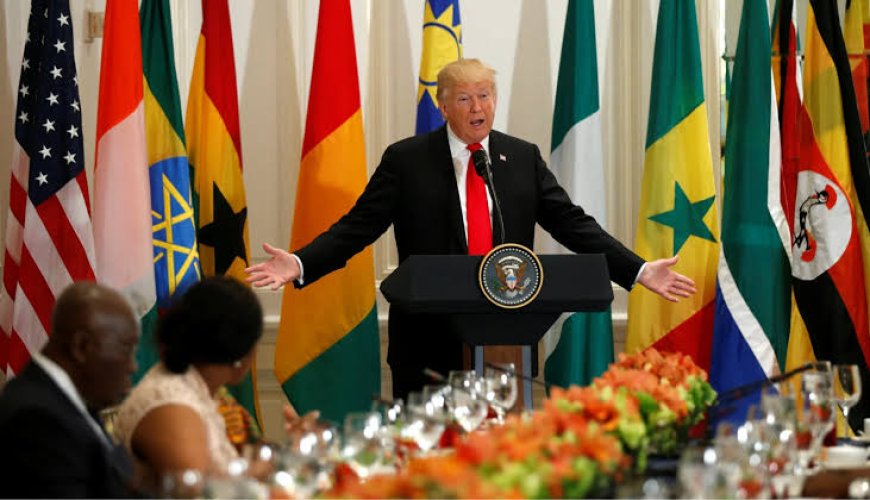
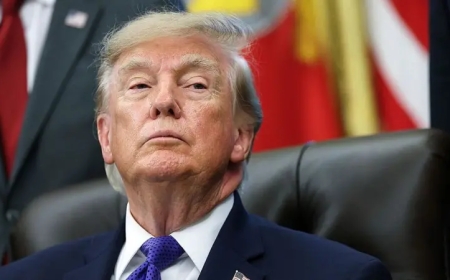
Several African countries are pushing back against a new U.S. foreign aid strategy introduced by President Donald Trump’s administration, arguing that it prioritizes American interests over genuine development partnerships.
Although the Trump administration has continued to allocate billions of dollars to support healthcare systems and disease prevention across Africa following the closure of the U.S. Agency for International Development (USAID), the funding now comes with new conditions that have sparked concern among several governments.
The policy marks a significant shift from previous U.S. assistance programs.
Rather than providing unconditional financial support, Washington is requiring recipient countries to invest more of their own resources into healthcare while signing bilateral agreements that emphasize American strategic and commercial interests.
Kenya became one of the first countries to sign a new $2.5 billion health partnership agreement with the United States after months of legal challenges and public debate.
U.S. Secretary of State Marco Rubio described the agreement as the first of many similar partnerships Washington hopes to conclude across Africa.
“This is the first of what we expect will be many agreements”, Rubio said, expressing confidence that the new model would reshape America's engagement with developing nations.
Under the arrangement, the United States has pledged long-term health assistance while Kenya has committed to increasing its own healthcare investment over the next five years.
Washington argues that the new approach will help African countries build stronger, self-sustaining health systems rather than relying indefinitely on foreign aid.
The policy reflects Trump’s “America First” agenda, which views foreign assistance as an investment that should also advance U.S. economic and strategic interests.
American officials insist the agreements are designed not only to improve healthcare outcomes but also to strengthen partnerships with U.S. pharmaceutical companies and medical institutions.
However, not every African nation is convinced.
Countries including Ghana, Zimbabwe and Zambia have declined to sign the agreements, citing concerns over national sovereignty, data privacy and the protection of natural resources.
Zambia’s Foreign Affairs Minister Mulambo Haimbe criticized what he described as attempts to link healthcare assistance with negotiations over access to critical minerals, insisting that such issues should be discussed separately in the interest of national sovereignty.
Meanwhile, Ghana and Zimbabwe raised objections over provisions requiring the sharing of health data with U.S. authorities and institutions.
Officials in both countries warned that once sensitive medical information leaves national borders, governments may lose control over how that data is stored, accessed or used.
Health experts say the debate highlights a broader transformation in global health diplomacy.
While previous partnerships were largely framed as humanitarian assistance, the new agreements increasingly resemble commercial and strategic arrangements, raising questions about fairness, transparency and long-term trust.
The controversy has also intensified following a recent Ebola outbreak in the Democratic Republic of Congo.
Humanitarian organizations argue that reductions in U.S. foreign aid, particularly after the dismantling of USAID, weakened emergency response capacity and delayed efforts to contain the disease.
Washington rejects those claims, saying it has redirected funding into more targeted and efficient programs.
As more African governments weigh whether to embrace or reject the new framework, the future of U.S.-Africa health cooperation remains uncertain.
Supporters view the agreements as a path toward greater self-reliance, while critics argue they risk replacing development partnerships with transactional diplomacy centered primarily on American interests.
What's Your Reaction?
 Like
0
Like
0
 Dislike
0
Dislike
0
 Love
0
Love
0
 Funny
0
Funny
0
 Angry
0
Angry
0
 Sad
0
Sad
0
 Wow
0
Wow
0