






















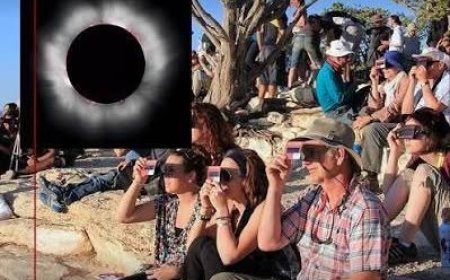


































































PHOTOS: Europe witnesses first total solar eclipse in three decades
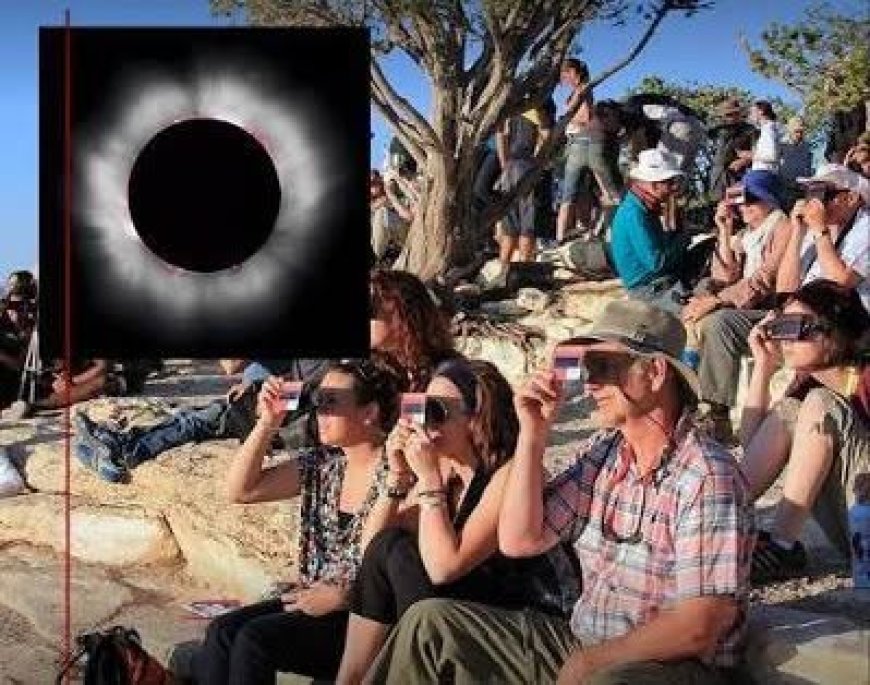
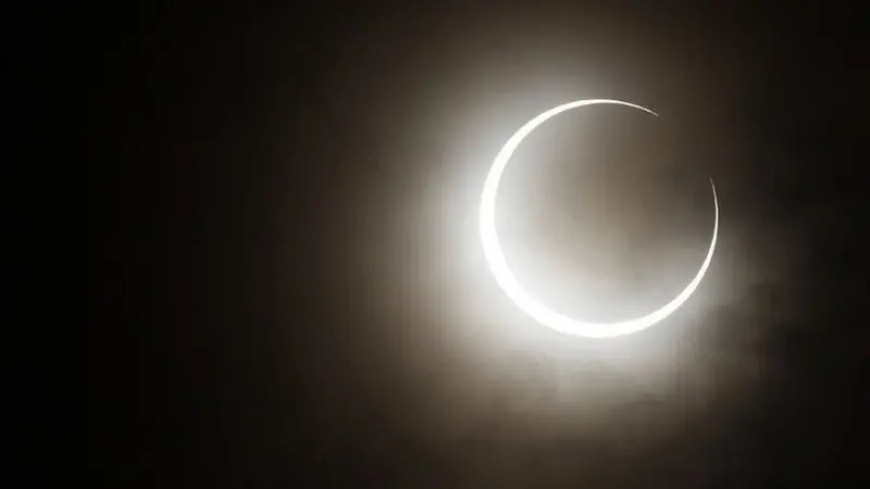
Millions of people across parts of Europe and the North Atlantic region turned their eyes to the skies on Wednesday, August 12, as a rare total solar eclipse swept across the Northern Hemisphere.
The eclipse was the first total solar eclipse visible from mainland Europe since 1999, turning the daytime sky dark in parts of Spain and creating a spectacular celestial display for observers in Iceland, Greenland and northern Russia.
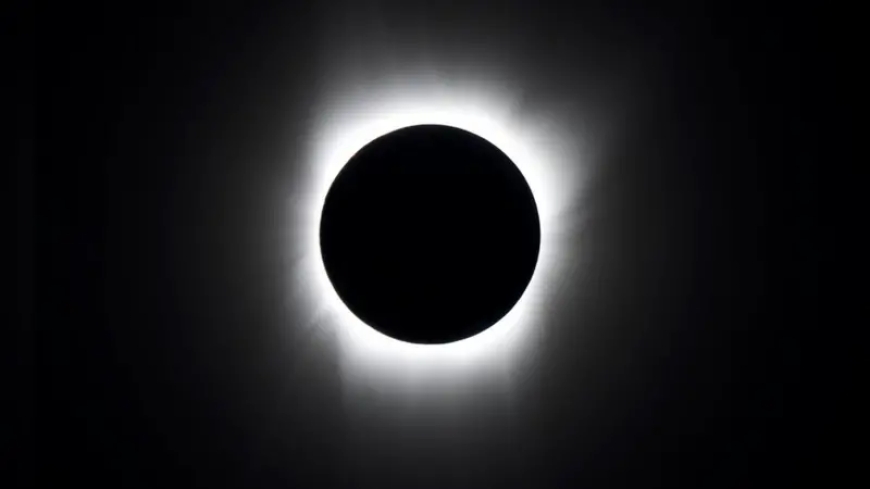
A total solar eclipse occurs when the Moon passes directly between the Earth and the Sun, temporarily blocking the Sun’s bright surface from view.
Along the narrow path of totality, the Moon completely covered the Sun and briefly revealed the Sun’s outer atmosphere, known as the corona.
The path of totality began in northern Russia before crossing the Arctic and North Atlantic, passing through Greenland and Iceland and reaching parts of Spain and a small area of north-western Portugal.
Most of Europe, as well as parts of north-west Africa and North America, experienced a partial eclipse.
For people close to the centre of the path, totality lasted less than two and a half minutes.
In Spain, the event occurred close to sunset, producing an especially dramatic scene as the eclipsed Sun appeared low on the western horizon.
NASA’s calculations showed totality beginning at about 8:28pm local time in León and around 8:32pm in Madrid, although Madrid experienced a 99% partial eclipse rather than totality.
Other major European cities also witnessed a remarkable partial eclipse.
London saw about 91% of the Sun covered, Paris about 92%, Lisbon about 95% and Barcelona about 99%.
The spectacle was not only a public event but also an important scientific opportunity.
NASA-supported researchers used aircraft and scientific balloons to study the Sun’s corona and examine how the sudden reduction in sunlight affects Earth’s atmosphere.
A NASA-funded team pursued the Moon’s shadow with a WB-57 research aircraft flying at high altitude, while balloon teams operated in Iceland and Spain.
Scientists are particularly interested in the corona because it is normally difficult to observe against the much brighter solar surface.
During totality, however, the Moon blocks the photosphere, allowing researchers to study the corona and its dynamics.
The event also prompted renewed warnings about eye safety.
People viewing the partial phases were advised to use certified solar-viewing glasses or other appropriate solar filters.
NASA stresses that ordinary sunglasses are not sufficient, and optical equipment such as cameras, binoculars and telescopes requires a proper solar filter fitted to the front of the instrument.
Rwanda was outside the principal visibility region of the August 12 solar eclipse, meaning the dramatic total or deep partial phases seen across Europe were not visible from the country.
The celestial calendar, however, remains busy.
A deep partial lunar eclipse is due on August 27–28, with the event visible from Rwanda.
In Kigali, the partial phase begins shortly after 4:30am on August 28, although the Moon will be very low on the western horizon near the maximum visible phase.
Photos

What's Your Reaction?
 Like
0
Like
0
 Dislike
0
Dislike
0
 Love
0
Love
0
 Funny
0
Funny
0
 Angry
0
Angry
0
 Sad
0
Sad
0
 Wow
0
Wow
0