

































Inside the enigmatic killing of Gorilla researcher Dian Fossey

Dian Fossey, the pioneering primatologist whose work transformed global understanding of mountain gorillas, destroyed long-held myths of these animals as violent brutes.
Her groundbreaking research and uncompromising dedication to gorilla conservation ultimately put her in conflict with poachers, officials, and commercial interests—tensions that may have led to her unresolved murder 40 years ago.
Fossey was an unlikely candidate for what would become the most extensive study of mountain gorillas ever conducted.
She had no formal zoological training and worked originally as an occupational therapist.
She also struggled with emphysema and a fear of heights, both challenging conditions for someone conducting research at high altitude in the rugged, forested slopes of Rwanda’s Volcanoes National Park.
Yet when she moved there in 1967 at age 35 and founded the Karisoke Research Centre, her passion for animals, physical determination, and emotional resilience soon proved more valuable than conventional credentials.
She quickly recognised that mountain gorillas were in severe danger: their habitat was shrinking, poaching was widespread, and their population was dwindling.
Her role grew far beyond observation as she committed herself to their protection.
Her passion for gorillas had begun with a 1963 trip to Africa, where she met the renowned palaeoanthropologist Louis Leakey.
He believed that studying great apes in their natural environment was essential to understanding human evolution.
Leakey had already helped Jane Goodall start her landmark chimpanzee research and saw Fossey as a potential candidate for similar work with gorillas.
According to a later Vanity Fair profile, Leakey controversially believed that women without scientific training were “unbiased,” less threatening to animals, and often more resilient in the field.
Whatever his reasoning, at the time gorillas were poorly understood and widely portrayed as monstrous and aggressive—an image fuelled by films like King Kong.
Fossey quickly began dismantling that myth through her patient, immersive approach to fieldwork.
To gain the trust of the gorillas, she imitated their everyday behaviours—feeding, scratching, and making their distinctive belch-like “contentment” sounds.
She also learned from early mistakes, such as chest-beating, which she discovered signaled alarm rather than friendliness.
To avoid appearing dominant or threatening, she approached gorilla groups on all fours, mimicking their knuckle-walking posture, because standing upright could easily be misinterpreted as aggression.
Over years of effort, she habituated entire gorilla families to her presence, eventually being allowed to sit among them peacefully.
This accomplishment alone reshaped scientific and public understanding of gorillas, revealing them to be gentle, intelligent, and deeply social creatures.
The world first saw the results of Fossey’s groundbreaking work in 1979, when David Attenborough filmed mountain gorillas for the BBC’s series Life on Earth.
At the time, the species was near extinction, making the footage both historic and urgent.
The segment, in which Attenborough sits calmly among a gorilla family, became one of the most celebrated moments in wildlife television.
But when the crew arrived, they found Fossey ill with a chest infection and grieving the brutal killing of her favourite gorilla, Digit.
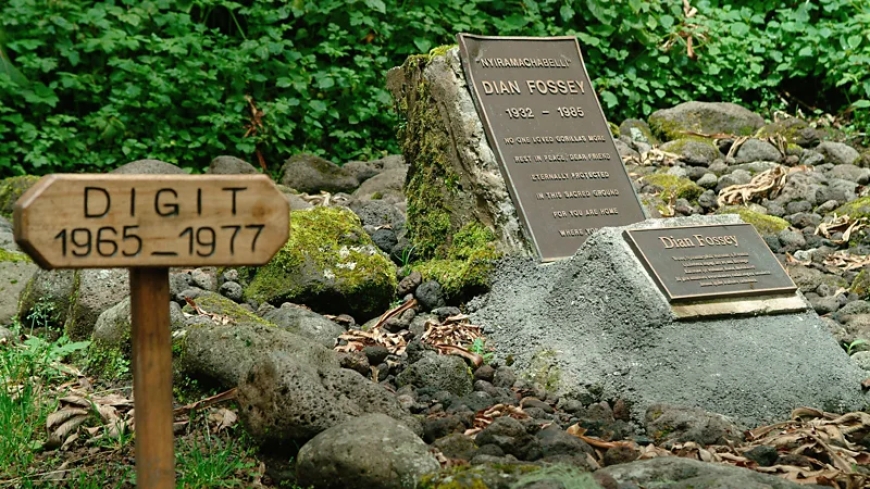
Poachers had speared the 12-year-old silverback to death while he defended his group.
When Digit’s body was discovered, it bore numerous wounds, and his head and hands had been taken—likely to be sold as souvenirs to foreign buyers.
Fossey later described this as the saddest moment of her career.
Despite her anguish, Fossey recognised the value of public exposure: allowing the BBC to film could highlight the gorillas’ plight and rally international support.
Thanks to her habituation methods, the crew captured unprecedented close-up footage.
Ian Redmond, her assistant at the time, later reflected that the ability to film wild gorillas in this way was Fossey’s great gift to the world.
Digit’s death deepened Fossey’s commitment to anti-poaching efforts, but it also intensified the more controversial side of her work.
She chased, captured, and interrogated poachers; burned at least one poacher’s house; and used masks and staged “witchcraft” rituals to frighten superstitious locals.
Some colleagues admired her courage, while others believed she had become emotionally unstable under the strain of constant conflict.
Dr Kelly Stewart, a primatologist who knew her, later said that Fossey began to view scientific research as secondary to fighting poachers.
Following Attenborough’s television feature, global concern for mountain gorillas surged, leading to the creation of the Mountain Gorilla Project.
Its goals included improving park security, educating local communities, and launching gorilla-focused tourism.
Surprisingly, Fossey opposed the initiative. She believed tourism would distress the animals and doubted that education campaigns would produce meaningful change.
Bill Weber, one of the project’s co-founders, admired Fossey but believed her approach was no longer effective in the long term.
Redmond, caught between perspectives, argued that both approaches—Fossey’s immediate anti-poaching tactics and the project’s long-term strategy—were necessary.
Despite disagreements, Fossey’s influence continued to expand. Her 1983 book Gorillas in the Mist became a bestseller and soon attracted interest from Hollywood.
The book showcased her fieldwork, her emotional bond with the gorillas, and the increasingly urgent conservation challenges they faced.
Ironically, she died before she could see the film adaptation completed.
On 26 December 1985, Fossey was found murdered in her cabin at Karisoke, killed in a machete attack.
Her death shocked the conservation world, though some who worked with her admitted they feared her confrontational tactics and growing list of enemies might eventually lead to violence.
The investigation into her murder remains unresolved. In 1986, a Rwandan court convicted her American research assistant Wayne McGuire in absentia, claiming he had fled to the United States after committing the murder. McGuire has always maintained his innocence.
Another suspect, Emmanuel Rwerekana, a Rwandan staff member at Karisoke, allegedly hanged himself in prison. Many who knew Fossey believe neither man was responsible.
Stewart, among others, suspected more powerful individuals—possibly involved in poaching, smuggling, or lucrative tourism ventures—had ordered her death because she threatened their financial interests.
Redmond echoed this view, saying Fossey stood in the way of people who were ruthless and motivated by profit.
Three years after her death, the film version of Gorillas in the Mist was released to critical acclaim, earning five Oscar nominations.
Sigourney Weaver, who portrayed Fossey, later said the role revealed to her the enormous impact one determined individual can have.
The story of Fossey’s life and death became a symbol of both the promise and perils of conservation activism.
Fossey was buried in the Virunga Mountains in the graveyard she created for the gorillas she had loved and lost, including Digit.
Her headstone reads:“No-one loved gorillas more.” Her legacy endures in the ongoing conservation programs she helped inspire and in the slow, hopeful recovery of mountain gorilla populations—an outcome that may not have been possible without her fierce devotion.
Photos
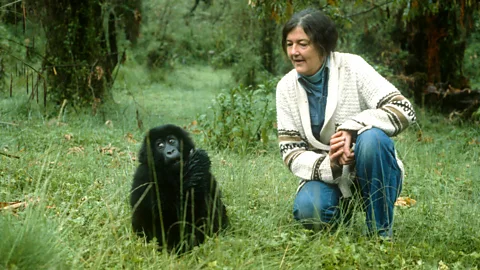
Gorilla researcher, Dian Fossey
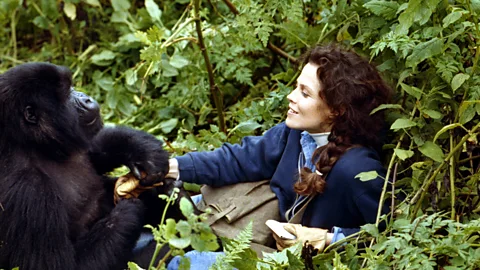
Sigourney Weaver was Oscar-nominated for playing Fossey in the film Gorillas in the Mist.
What's Your Reaction?
 Like
0
Like
0
 Dislike
0
Dislike
0
 Love
0
Love
0
 Funny
0
Funny
0
 Angry
0
Angry
0
 Sad
0
Sad
0
 Wow
0
Wow
0