













Goma: MONUSCO chief meets Kabila over Eastern DRC conflict

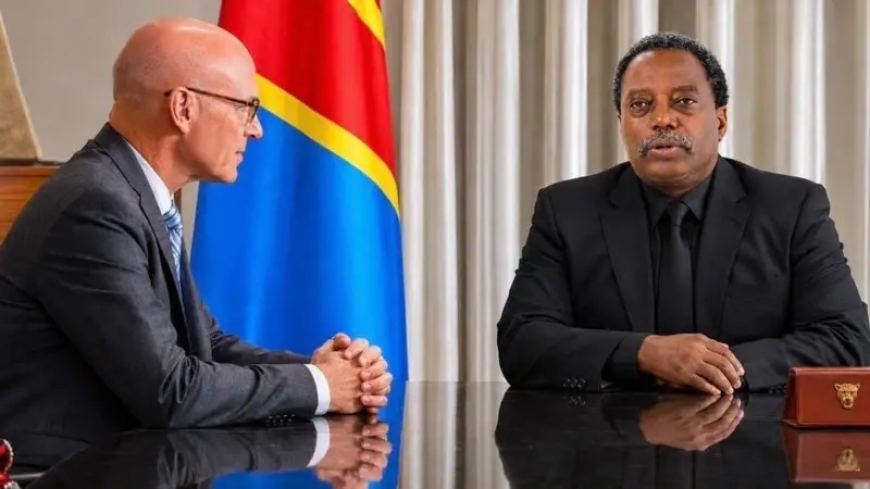
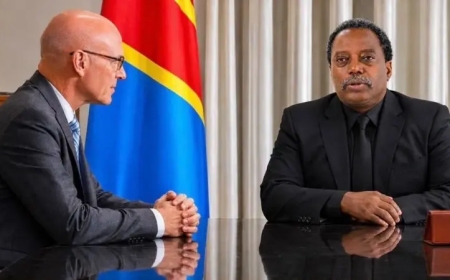
The head of the United Nations peacekeeping mission in the Democratic Republic of Congo (MONUSCO), James Swan, has met former Congolese President Joseph Kabila in Goma as diplomatic efforts to end the conflict in eastern DRC continue.
The meeting, held on Tuesday, November 3, 2026, was the first publicly reported engagement between the two since Kabila emerged as the leader of the Front for the Refoundation of the Nation (FRN), a political-military movement presented as succeeding the Congo River Alliance (AFC)/M23 coalition.
According to MONUSCO, discussions focused on ongoing peace initiatives, respect for the ceasefire and efforts to achieve a peaceful resolution to the conflict that has destabilised eastern DRC.
Swan also held discussions with representatives of the Expanded Joint Verification Mechanism Plus (EJVM+), known in French as MCVE+, which is responsible for monitoring and verifying alleged ceasefire violations.
The UN mission reaffirmed its commitment to supporting the mechanism within the framework of its mandate, particularly in protecting civilians, facilitating humanitarian access and supporting ceasefire monitoring.
Kabila was accompanied by FRN vice-presidents Corneille Nangaa and Bertrand Bisimwa, alongside several military officials, while Swan led a delegation of MONUSCO representatives.
Speaking to local journalists after the meeting, Bisimwa reiterated the movement’s commitment to the Doha peace process but expressed concerns over delays in implementing agreements reached between the Congolese government and the AFC/M23 under Qatar’s mediation.
He also questioned proposals to extend MONUSCO’s mandate, arguing that the mission should gradually withdraw from the country while continuing to support ceasefire monitoring during the transition.
Bisimwa further warned that proposals to amend the DRC Constitution could undermine the peace process, particularly if they pave the way for President Félix Tshisekedi to seek a third term in office.
The remarks reflect growing political tensions surrounding the peace negotiations, with the FRN warning that constitutional changes could affect its willingness to remain engaged in the Doha process.
The meeting comes as international and regional mediators continue efforts to secure a lasting ceasefire and advance negotiations between the parties involved in the conflict.
The Doha Framework for Peace, signed in November 2025, provides a basis for negotiations between the Congolese government and the AFC/M23.
However, implementation has faced challenges, with several agreed protocols still requiring progress.
MONUSCO’s role in supporting the ceasefire mechanism is backed by UN Security Council Resolution 2808, which extended the mission’s mandate until December 20, 2026, and authorised technical and logistical support for monitoring the ceasefire.
The Congolese government had not immediately issued a public response to Bisimwa’s latest remarks.
Despite ongoing diplomatic engagements, the situation in eastern DRC remains fragile, leaving the implementation of ceasefire commitments and the protection of civilians among the major challenges facing efforts to restore lasting peace.
What's Your Reaction?
 Like
0
 Dislike
0
 Love
0
 Funny
0
 Angry
0
 Sad
0
 Wow
0