













































































Russia's invasion of Ukraine in numbers after 4 Years: Deaths, Territory and Costs

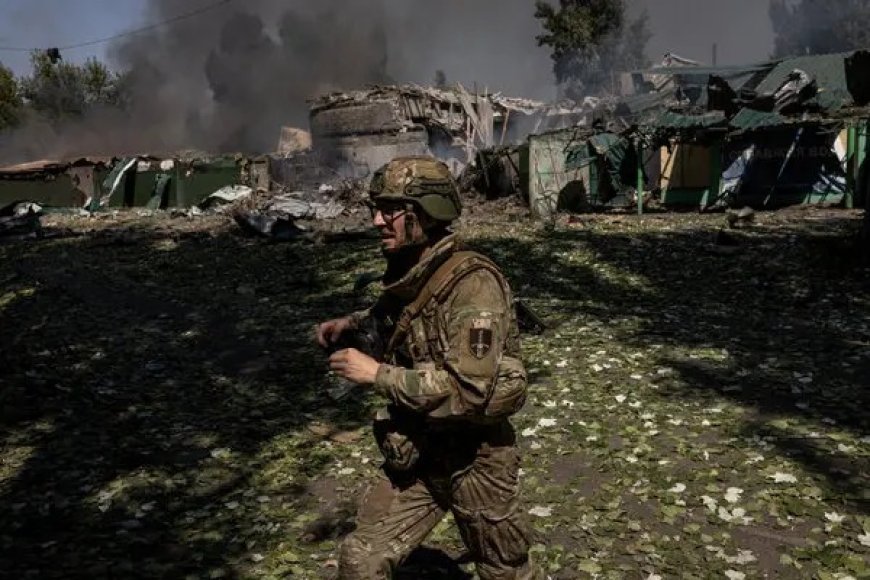
Russia began its full-scale invasion of Ukraine on 24 February 2022, launching missile strikes and ground assaults from multiple directions, including Belarus, Russia, and Crimea.
This marked a dramatic escalation of the conflict that began in 2014 after Russia annexed Crimea.
Four years into the war, the conflict remains Europe’s largest since World War II and Russia’s deadliest since that time, reshaping the global economy and prompting unprecedented sanctions on Moscow.
The human cost has been immense. Military casualties are estimated at around two million combined for both sides.
Ukraine reported roughly 418,000 Russian troops killed or wounded in 2025 alone, bringing total Russian casualties to about 1.25 million.
Independent estimates, such as from the Center for Strategic and International Studies (CSIS), suggest 1.2 million Russian casualties, including at least 325,000 deaths by December 2025, with additional losses reported in January 2026.
CSIS described these figures as “extraordinary,” noting no major power has suffered similar losses since World War II.
Ukraine’s President Volodymyr Zelenskyy reported 55,000 Ukrainian military deaths, while the CSIS estimates up to 600,000 Ukrainian casualties, including 140,000 deaths.
Civilian casualties have also been severe. The United Nations Human Rights Monitoring Mission in Ukraine (HRMMU) recorded over 15,000 civilian deaths and 41,500 injuries during four years of full-scale war, with 2025 being the deadliest year for civilians.
The Conflict Intelligence Team (CIT) reported nearly 3,000 civilian deaths and 17,775 injuries in 2025, mostly due to Russian drone strikes and occupation activities.
Ukraine has lost roughly a quarter of its pre-war population of 42 million, with five million living under Russian occupation and another 5.9 million displaced abroad, mostly in Europe.
Thousands of children were abducted to Russia, with over 19,000 estimated affected.
Territorial changes have been significant but limited in recent years. At its peak in March 2022, Russia occupied 26% of Ukraine, including Crimea and large parts of Luhansk and Donetsk.
By April 2022, Ukrainian forces recaptured key northern cities, reducing Russian control to 20%. Further counteroffensives in mid-2022 pushed Russian forces east of the Oskil and Dnipro rivers, leaving about 17.8% under occupation.
By December 2025, Russia controlled roughly 19.3% of Ukraine, around 116,000 sq km, after a largely frozen conflict with small territorial gains.
The financial costs of the war have been enormous. Russian military spending rose from $66bn in 2021 to $102bn in 2022, reaching $149bn by 2024.
Estimates suggest spending in 2025 could surpass $149bn, though budget cuts and economic constraints may reduce actual outlays by 15%.
Russia also faces immobilised foreign reserves of around $300bn, including $230bn in Belgium, with 90% earmarked for Ukraine’s military and 10% for reconstruction. The EU also froze $33bn in private Russian assets.
Ukraine’s defence spending surged from $6.9bn in 2021 to $41bn in 2022 and $65bn in 2023–24, reaching $71bn in 2025.
Most funding came from allies, particularly the European Union and the United States, contributing over $300bn in military and budgetary support since 2022.
After the US drastically reduced aid in 2025, Europe increased its contributions by roughly two-thirds, providing about $70bn while US support fell to $0.4bn.
Four years into the conflict, the Russia–Ukraine war has caused massive human, territorial, and economic losses.
Millions have died or been displaced, thousands of square kilometers of land remain contested, and both countries have spent unprecedented sums on military operations.
The war continues to reshape global geopolitics, economies, and humanitarian realities, with no immediate resolution in sight.
What's Your Reaction?
 Like
0
Like
0
 Dislike
0
Dislike
0
 Love
0
Love
0
 Funny
0
Funny
0
 Angry
0
Angry
0
 Sad
0
Sad
0
 Wow
0
Wow
0