






















































































































Sports Betting goes Global, Experts warn of Public Health risk

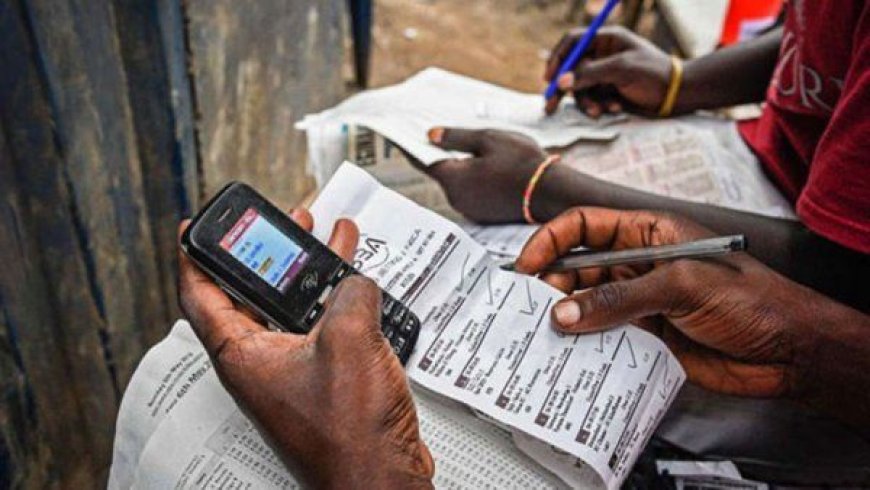
Evan was 19 the first time he placed a sports bet. He didn’t enter a casino or meet a bookie. He downloaded an app.
“I was already watching the games,” he said. “The betting just felt like part of it.”
That shift—from occasional wagering to constant access—is what public health experts increasingly warn about.
Since the rapid expansion of legalized sports betting, gambling has become a 24/7 activity, embedded in smartphones and fueled by aggressive advertising.
Researchers now describe the trend not as harmless entertainment, but as a growing public health concern.
Unlike traditional gambling, modern sports betting is designed for speed.
In-game wagering allows users to place bets every few seconds—on the next play, the next shot, the next possession.
According to addiction specialists, this rapid cycle mirrors the mechanics of high-risk gambling, accelerating loss-chasing behavior and increasing the likelihood of addiction.
“The faster the bet, the higher the harm,” said one clinical psychologist who studies gambling disorders.
“It stimulates the brain’s reward system in ways that are comparable to substances like alcohol or nicotine.”
Accessibility plays a critical role. With betting apps installed on phones, users can gamble anywhere—during class, at work, late at night.
For Evan, that meant betting didn’t stop when the game ended. Push notifications encouraged him to place “just one more” wager, often framing losses as near misses.
Advertising compounds the risk. Sports betting promotions now saturate broadcasts, social media, and podcasts, frequently featuring athletes and celebrities.
Studies show this marketing is particularly influential among young people, many of whom report experiencing gambling-related harm before the age of 20.
“I didn’t feel like I was doing anything dangerous,” Evan said. “Everyone was talking about parlays like it was a joke.”
Financial consequences followed quickly. Small losses turned into larger ones as he chased wins, a pattern commonly reported by people with gambling problems.
Anxiety increased. Sleep declined. He avoided checking his bank account.
Experts note that gambling harm rarely appears in isolation. It is associated with increased rates of depression, substance use, and, in severe cases, suicidal behavior.
Yet because betting is framed as a skill-based, socially accepted activity, many people delay seeking help.
Quitting is also uniquely difficult. Unlike substances, gambling cannot be avoided entirely.
Ads are omnipresent, apps are easy to reinstall, and sports themselves—once a neutral pastime—become triggers.
Evan eventually deleted the app after realizing he was no longer betting for enjoyment, but for relief.
Recovery, he said, was slow and uneventful, marked more by silence than celebration.
Public health advocates argue that individual stories like his reflect a broader structural problem: An industry built on constant engagement, rapid betting, and relentless marketing.
“Responsibility is often framed as a personal failure,” one researcher said. “But the environment is designed to make restraint difficult.”
As sports betting continues to expand, researchers and clinicians warn that the costs may extend far beyond lost money—reshaping how risk, entertainment, and addiction intersect in everyday life.
What's Your Reaction?
 Like
0
Like
0
 Dislike
0
Dislike
0
 Love
0
Love
0
 Funny
0
Funny
0
 Angry
0
Angry
0
 Sad
0
Sad
0
 Wow
0
Wow
0