























































































Sudan: WFP warns funding shortage could force further aid cuts
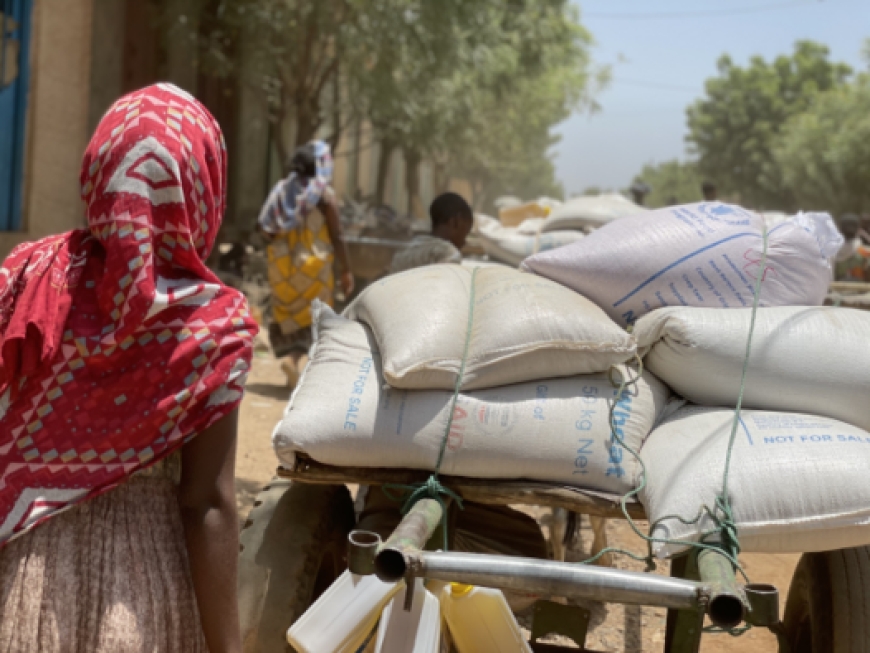
The United Nations World Food Programme (WFP) has warned that it may be forced to further reduce food assistance in Sudan within weeks unless it receives additional funding, as conflict, displacement and hunger continue to devastate communities across the country.
WFP Acting Executive Director Carl Skau issued the warning after an eight-day visit to Sudan, during which he travelled to Khartoum, El Obeid, El Fasher and Tawila and witnessed the impact of the war on civilians.
Skau said about 20 million people are facing acute hunger, while around 14 million have been displaced by the conflict.
He described Sudan as the world’s largest hunger and displacement crisis and said WFP operations are severely underfunded.
The agency currently reaches more than four million people each month but needs $579 million to maintain operations through October 2026.
In El Fasher, the capital of North Darfur, Skau said he witnessed extensive destruction following months of fighting and severe restrictions on humanitarian access.
The city has been at the centre of some of the conflict’s worst humanitarian conditions.
UN-backed assessments have found famine conditions in El Fasher, while other parts of Darfur and Kordofan remain at risk of famine.
Many people who have fled the fighting have ended up in Tawila, which has become one of Darfur’s largest displacement centres.
More than 650,000 displaced people had sought safety there, according to WFP, putting enormous pressure on food, water, shelter and health services.
The humanitarian situation is also deteriorating in Kordofan, where fighting has intensified and new waves of displacement are increasing demand for assistance.
Sudan’s humanitarian crisis began with the outbreak of war in April 2023 between the Sudanese Armed Forces (SAF) and the paramilitary Rapid Support Forces (RSF).
The conflict has devastated homes, markets, hospitals and agricultural production, while forcing millions of people from their communities.
According to WFP, nearly 19.5 million people were facing crisis levels of acute food insecurity in May 2026, including about 135,000 people experiencing catastrophic hunger.
More than five million people were classified in emergency levels of food insecurity.
The crisis extends beyond food.
The UN estimates that nearly 34 million people require humanitarian assistance, while disease outbreaks and severe malnutrition continue to threaten vulnerable communities.
An estimated 825,000 children under five are expected to suffer severe acute malnutrition in 2026.
For aid agencies, the combination of insecurity, restricted access and shrinking international funding is making an already devastating crisis increasingly difficult to manage.
WFP says continued funding and safe humanitarian access are urgently needed to prevent further deterioration.
What's Your Reaction?
 Like
0
Like
0
 Dislike
0
Dislike
0
 Love
0
Love
0
 Funny
0
Funny
0
 Angry
0
Angry
0
 Sad
0
Sad
0
 Wow
0
Wow
0