






















































Mushikiwabo’s OIF tenure extended as succession talks hit deadlock

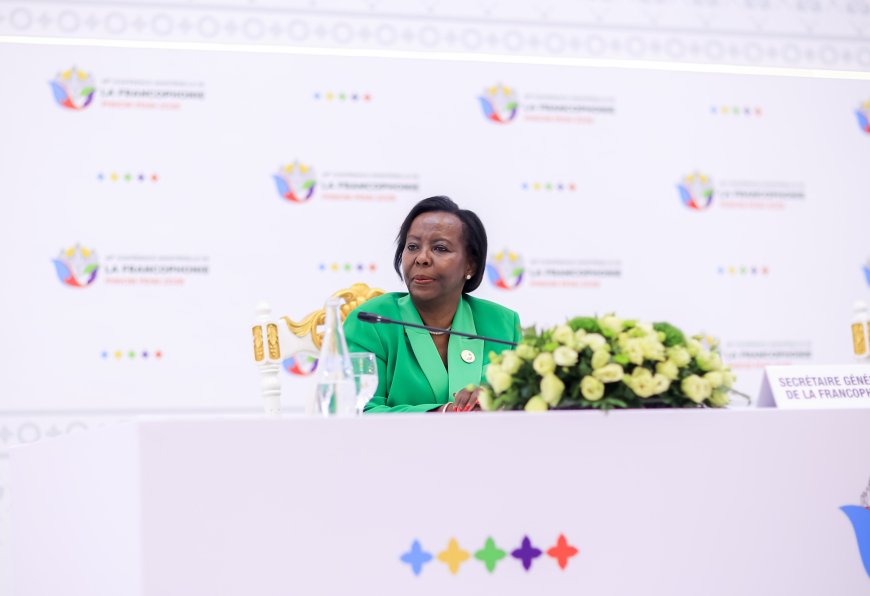
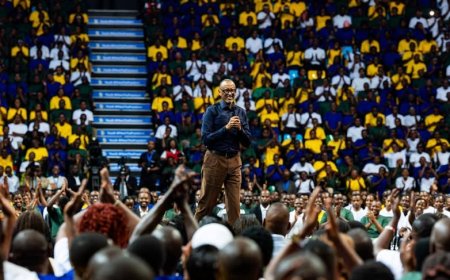
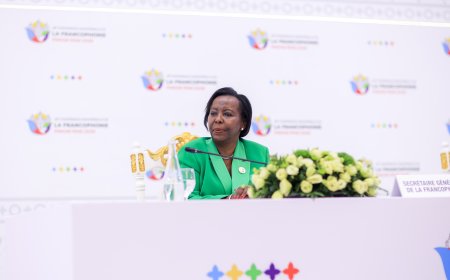
Rwanda’s Louise Mushikiwabo will remain Secretary-General of the International Organisation of La Francophonie (OIF) for another year after member states postponed the election of her successor due to a lack of consensus.
The decision was reached on Monday, November 16, following the 20th Summit of Heads of State and Government of the Francophonie, held in Phnom Penh, Cambodia, amid diplomatic tensions between Rwanda and the Democratic Republic of Congo (DRC).
According to the Agence France-Presse (AFP), citing sources close to the discussions, member states failed to agree on a common candidate to lead the organisation for the 2027–2030 term, prompting them to postpone the election by 12 months.
Mushikiwabo, who has led the organisation since January 2019, following her election in October 2018, had been seeking a third consecutive four-year term.
However, she will remain in office until the next election, while Rwanda has agreed not to present another candidate when the position is contested next year.
Four candidates had been in the race: Mushikiwabo, former Congolese minister Juliana Amato Lumumba, former Romanian Prime Minister Dacian Cioloș and Mauritanian politician Coumba Bâ.
The DRC had opposed Mushikiwabo’s re-election, threatening to withdraw from the organisation if she secured another term.
The disagreement added to tensions during the summit, with France and Canada reportedly encouraging member states to reach a compromise and preserve the organisation’s unity.
The postponement marks an unprecedented development in the organisation’s leadership history, as previous secretaries-general were selected through consensus.
The Organisation internationale de la Francophonie traces its institutional origins to March 20, 1970, when 21 countries signed an agreement in Niamey, Niger, establishing the Agency for Cultural and Technical Cooperation (ACCT).
The initiative was championed by prominent leaders, including Senegal’s Léopold Sédar Senghor, Tunisia’s Habib Bourguiba, Niger’s Hamani Diori and Cambodia’s Norodom Sihanouk, who sought to establish an international framework for cooperation among French-speaking nations.
The first Francophonie Summit was held in Paris in 1986.
The organisation subsequently adopted its charter in 1997, when the position of Secretary-General was established.
It became the International Organisation of La Francophonie in 2005.
Its previous secretaries-general include Egypt’s Boutros Boutros-Ghali, Senegal’s Abdou Diouf and Canada’s Michaëlle Jean, before Mushikiwabo became the first Rwandan to occupy the position in 2018.
Today, the OIF brings together 90 states and governments, comprising 53 full members, five associate members and 32 observers.
Its work extends beyond promoting the French language to include education, cultural diversity, democracy, peace, human rights and international cooperation.
The latest leadership dispute comes after Burkina Faso, Mali and Niger withdrew from the organisation in 2025, presenting another challenge to its unity and influence across the Francophone world.
Photos


What's Your Reaction?
 Like
0
 Dislike
0
 Love
0
 Funny
0
 Angry
0
 Sad
0
 Wow
0