





















































































Day 15 of Iran War: Escalating strikes and Regional tensions

The conflict involving the United States, Israel, and Iran has entered its third week, raising fears of a broader regional and economic crisis.
Tensions escalated after US forces launched strikes on military targets on Kharg Island, a strategic hub through which the majority of Iran’s crude oil exports pass.
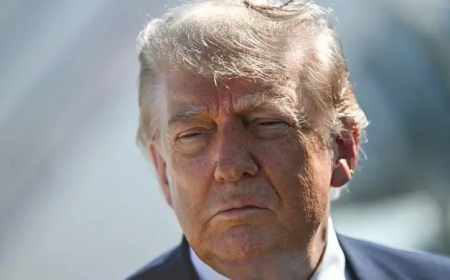
US President Donald Trump said the strikes specifically targeted military installations on the island but deliberately avoided damaging its oil infrastructure.
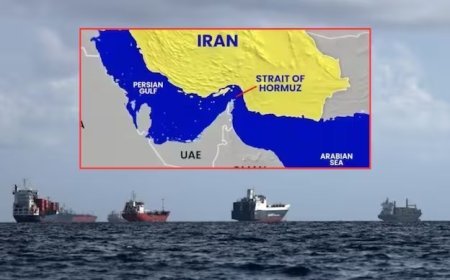
However, he warned that the oil facilities could become targets if Iran disrupts shipping through the Strait of Hormuz, a narrow waterway responsible for transporting a significant portion of the world’s oil supply.
Iranian authorities have responded with strong warnings, saying any attacks on their energy infrastructure would trigger retaliation against oil facilities and US-aligned assets across the Gulf region.
The exchange of threats has increased concerns about a wider energy and security crisis affecting global markets.
- Escalating military activity
In Iran, the Islamic Revolutionary Guard Corps (IRGC) said it launched missiles and drones at Israel in coordination with the Lebanese armed group Hezbollah.
According to the IRGC, the attack coincided with Quds Day, an annual event in Iran that expresses support for the Palestinian cause.
Meanwhile, US Secretary of Defense Pete Hegseth claimed that Iran’s new supreme leader, Mojtaba Khamenei, had been wounded during the ongoing conflict.
Washington also announced a $10 million reward through the United States Department of State for information about Khamenei and other senior Iranian officials.
Kharg Island holds immense strategic importance to Iran’s economy.
Nearly 90 percent of the country’s crude oil exports pass through the island before moving through the Gulf and the Strait of Hormuz to international markets.
Analysts say targeting the island signals that the United States could significantly disrupt Iran’s energy exports if the conflict intensifies.
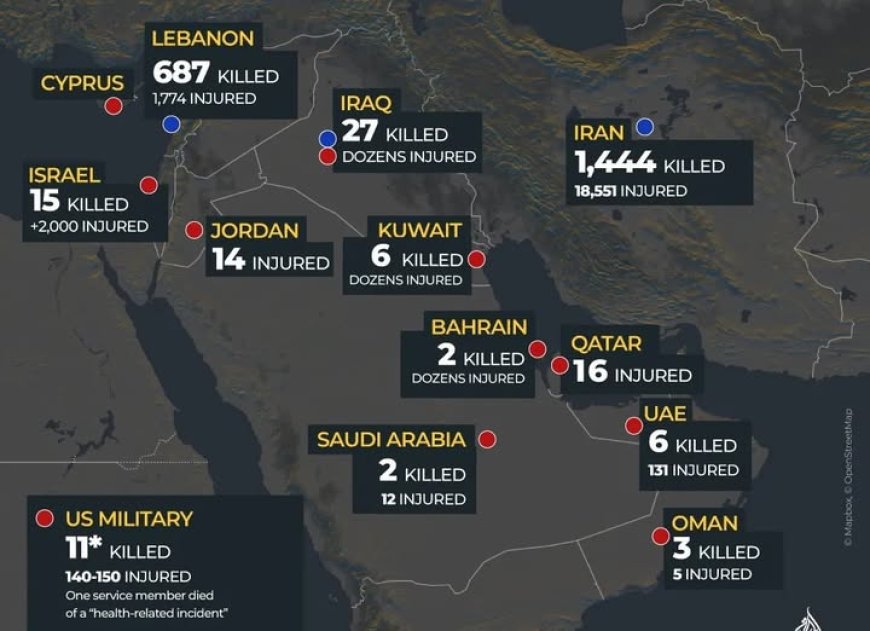
Since the start of the joint US-Israel campaign on February 28, Iranian authorities report that at least 1,444 people have been killed and more than 18,500 injured in the attacks.
In response, Iran has launched multiple drone and missile strikes against US bases, military positions, and commercial facilities across the Gulf.
- Regional impact
Several Gulf countries have already experienced security incidents linked to the conflict.
In Saudi Arabia, the Ministry of Defense said its forces intercepted and destroyed six drones over the eastern region and the “Empty Quarter” desert.
In Qatar, the armed forces intercepted an incoming missile after authorities issued emergency alerts to mobile phones warning residents about possible missile and drone threats.
Some areas, including parts of Education City, were temporarily evacuated.
Authorities in Bahrain also activated air raid sirens and urged residents to move to safe areas.
In Oman, two people were reportedly killed by falling drones in a recent incident.
Following that event, Oman’s Sultan Haitham bin Tariq held discussions with Qatar’s Emir Tamim bin Hamad Al Thani, calling for dialogue and de-escalation across the region.
- Developments in Israel and Lebanon
Israel says its military campaign against Iranian and allied targets has intensified significantly.
The Israeli military reported carrying out about 7,600 strikes in Iran and 1,100 in Lebanon since the joint operation with the United States began.
Missile attacks from Iran also reached Israeli territory, with explosions reported near Tel Aviv, the country’s commercial hub.
In Lebanon, Israeli attacks have killed at least 773 people since early March, according to the Lebanese Ministry of Public Health.
A strike on a healthcare center in Borj Qalaouiye killed 12 medical workers, including doctors, nurses, and paramedics.
Israeli shelling also reportedly struck the headquarters of a Nepalese peacekeeping battalion serving with the United Nations Interim Force in Lebanon (UNIFIL).
The leader of Hezbollah, Naim Qassem, said the group is prepared for a “long confrontation,” describing the conflict as a defensive response to Israeli actions.
- Attacks in Iraq
The conflict has also spilled into Iraq. Iraqi authorities said a missile struck a helipad at the United States Embassy Baghdad inside the heavily fortified Green Zone. Security sources reported damage to the embassy’s air defense system.
Iraq’s Prime Minister Mohammed Shia al-Sudani later pledged to prevent further attacks following the death of a French soldier in a drone strike in the Kurdish region.
Meanwhile, Turkiye issued a travel advisory urging its citizens to avoid non-essential trips to Iraq.
- Global economic impact
The conflict has triggered significant economic repercussions worldwide. Rising tensions around the Strait of Hormuz have driven oil prices higher, raising concerns about energy supply disruptions.
In response, Canada announced plans to release 23.6 million barrels of oil in coordination with the International Energy Agency to stabilize global markets.
The aviation industry is also feeling the impact. Major Indian airlines such as Air India and IndiGo have increased ticket prices due to rising aviation fuel costs linked to the geopolitical crisis.
Analysts say the conflict is also reshaping diplomatic dynamics. Several countries, including India, France, and Italy, are now engaging directly with Iran to ensure safe passage for their vessels through the Strait of Hormuz, indicating a shift in how nations are responding to the crisis.
As military operations continue and tensions rise, experts warn that further escalation could deepen both regional instability and the global energy shock.
What's Your Reaction?
 Like
0
Like
0
 Dislike
0
Dislike
0
 Love
0
Love
0
 Funny
0
Funny
0
 Angry
0
Angry
0
 Sad
0
Sad
0
 Wow
0
Wow
0