














































































































The truth behind Japan’s Samurai Warriors

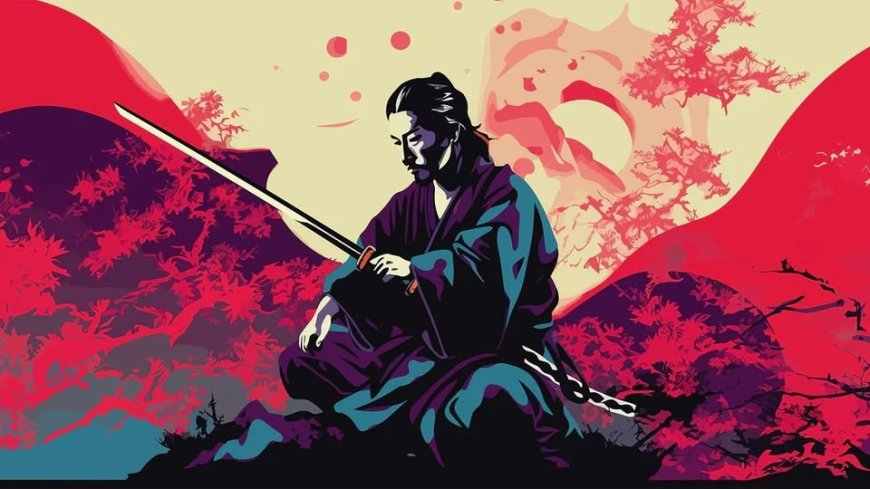
From their medieval origins to their reinvention in global popular culture, the samurai have become one of history’s most mythologised warrior classes.
Immortalised in ukiyo-e prints, novels, films, television series such as Shōgun, and even the Star Wars franchise, they are often portrayed as fearless, honour-bound knights defined by loyalty and self-sacrifice.
Yet a new exhibition at the British Museum argues that the true story of the samurai is far more complex—and far more interesting—than the familiar legend suggests.
According to the exhibition’s curator, Rosina Buckland, the samurai were never a single, unchanging group.
While they are widely perceived in the West as archetypal warriors, that identity represents only one phase of a long and evolving history.
Their origins date back to the 10th Century, when they were recruited as mercenaries to serve imperial courts.
Over time, they developed into a powerful rural gentry. Contrary to later romantic portrayals, early samurai were not necessarily guided by rigid chivalric codes.
In battle, they often relied on pragmatic tactics such as ambush and deception, and their motivations frequently centred on land, power and status rather than abstract ideals of honour.
Adaptability proved to be one of their defining traits. The samurai readily absorbed foreign influences and technologies.
One striking example displayed in the exhibition is a suit of armour incorporating a Portuguese-inspired cuirass, designed with angled surfaces to deflect musket fire.
Firearms were introduced to Japan by Europeans in 1543, and samurai quickly integrated this new technology into their warfare, challenging the notion of them as purely traditionalist warriors.
As Japan entered periods of political turmoil marked by disputes over imperial succession, samurai clans rose to prominence.
In 1185, the Minamoto clan established a parallel military government under a shōgun, initiating centuries of warrior rule.
Yet even in these early stages, cultural sophistication was critical to political authority. “Culture is power,” Buckland notes.
Military leaders recognised that brute force alone was insufficient to govern.
Drawing on Neo-Confucian philosophy, particularly its emphasis on balancing martial strength with cultural refinement, the samurai elite cultivated skills in poetry, painting, music, theatre and tea ceremony.
Mastery of the arts became a vital complement to martial prowess.
The establishment of the Tokugawa Shogunate in the early 17th Century marked another transformation.
After Tokugawa Ieyasu secured dominance in the early 1600s, Japan entered more than 250 years of relative peace.
With large-scale warfare largely absent, samurai shifted from battlefield commanders to bureaucrats and administrators.
They became lawmakers, tax collectors and officials embedded throughout the machinery of government.
During this era, the role of women within samurai households gained increased importance.
The Tokugawa system required regional lords (daimyō) to maintain residences in Edo (modern-day Tokyo), effectively holding their families there to ensure loyalty.
With husbands often absent, women managed large households, oversaw finances, directed staff and supervised their children’s education.
Artefacts in the exhibition—including robes and etiquette manuals—highlight their responsibilities and influence.
Popular culture of the time also celebrated legendary female warriors such as Tomoe Gozen, depicted in 19th-Century prints as a fierce combatant.
The samurai class was officially abolished during the Meiji Restoration in 1869, as Japan modernised and opened to the world. For a time, the samurai identity was rejected.
However, nostalgia soon revived it. Both within Japan and abroad, writers and political movements reshaped the samurai image to serve new purposes.
Works like Bushido: The Soul of Japan (1899) helped popularise a romanticised code of honour, while nationalist propaganda later manipulated samurai symbolism to promote militarism.
After the Second World War, the samurai found new life in cinema.
Director Akira Kurosawa’s films, including Seven Samurai and Yojimbo, profoundly influenced Western filmmaking, inspiring remakes and adaptations such as The Magnificent Seven and A Fistful of Dollars.
Hollywood productions like The Last Samurai further cemented their global appeal.
Even Star Wars drew heavily on samurai aesthetics and storytelling, most notably in Darth Vader’s armour and the narrative structure of A New Hope.
Ultimately, the samurai’s true history is one of continual reinvention—from mercenaries to rulers, from bureaucrats to cultural icons.
While the myths endure, the reality reveals a dynamic and adaptive social class whose legacy continues to evolve.
What's Your Reaction?
 Like
0
Like
0
 Dislike
0
Dislike
0
 Love
0
Love
0
 Funny
0
Funny
0
 Angry
0
Angry
0
 Sad
0
Sad
0
 Wow
0
Wow
0