




































































Norway’s King Harald V dies at 89 after 35-year reign

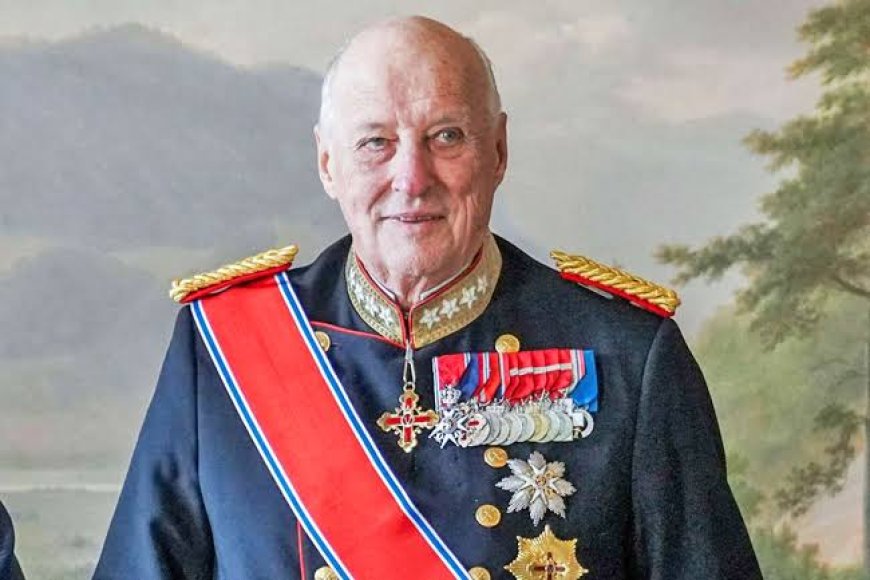
Norway’s King Harald V, a popular and reform-minded monarch who spent more than three decades modernising the country’s monarchy, died peacefully on Friday at the age of 89, the Royal Palace said.
Harald died at 6:35 a.m. local time at Oslo University Hospital, where he had been receiving treatment after his health deteriorated in recent days.
The royal flag over the Palace in Oslo was lowered to half-mast following his death.
His son, Crown Prince Haakon, succeeds him as king.
Harald had been Norway’s head of state since Jan. 17, 1991, when he succeeded his father, King Olav V.
The Norwegian Royal Court described the king as the country’s foremost symbol of national community, with a role that included representing Norway at home and abroad and standing with citizens during times of celebration and tragedy.
His reign was marked by efforts to make the monarchy more open and reflective of modern Norwegian society.
He became known for his informal manner and close relationship with ordinary citizens, earning descriptions such as the “People’s King”.
One of the defining moments of his reign came after the July 2011 attacks, when far-right extremist Anders Behring Breivik killed 77 people in Oslo and on the island of Utøya.
Harald responded with calls for unity and tolerance, becoming a powerful symbol of national solidarity during one of Norway’s darkest periods.
He also attracted international attention in 2016 with a speech celebrating Norway’s diversity, saying the country included people from different nationalities, religions and sexual orientations.
Born on Feb. 21, 1937, Harald was the first Norwegian-born crown prince since the Middle Ages.
He was three years old when Nazi Germany invaded Norway in 1940.
He and his family fled during the war, spending time in Sweden and the United States before returning to Norway in 1945.
Harald became crown prince in 1957 and later studied social sciences, history and economics at Oxford University’s Balliol College.
He also completed military training and maintained a lifelong interest in sport.
A keen sailor, he represented Norway at three Olympic Games and remained involved in competitive sailing well into later life.
He was also associated with environmental causes, including the Norwegian branch of the World-Wide Fund for Nature.
Harald’s marriage to Sonja Haraldsen in 1968 was another significant break with royal tradition.
Sonja was a commoner, and Harald had reportedly insisted that he would remain unmarried rather than give up his relationship with her.
She became Queen Sonja when he ascended the throne in 1991.
The couple were married for nearly 58 years and had two children, Princess Märtha Louise and Crown Prince Haakon.
Harald’s final years were increasingly affected by health problems.
He reduced his public engagements in 2024 and had several hospitalisations in recent years, including treatment for infections.
His latest illness led Haakon to serve as regent while his father was unable to perform his duties.
Under Norway’s constitution, the crown prince assumes the king’s powers when the monarch is incapacitated by illness.
His death comes as the Norwegian royal family faces a period of heightened scrutiny over health problems and controversies involving members of Haakon’s household.
Nevertheless, Harald’s personal popularity remained strong.
Norwegian Prime Minister Jonas Gahr Støre praised the late king for his service to the country, while foreign monarchs and leaders expressed condolences.
Haakon now takes the throne at a difficult moment for the monarchy, but his father’s legacy is likely to remain closely associated with stability, openness and a strong connection to the Norwegian people.
What's Your Reaction?
 Like
0
Like
0
 Dislike
0
Dislike
0
 Love
0
Love
0
 Funny
0
Funny
0
 Angry
0
Angry
0
 Sad
0
Sad
0
 Wow
0
Wow
0