








































































Fiji declares national HIV emergency
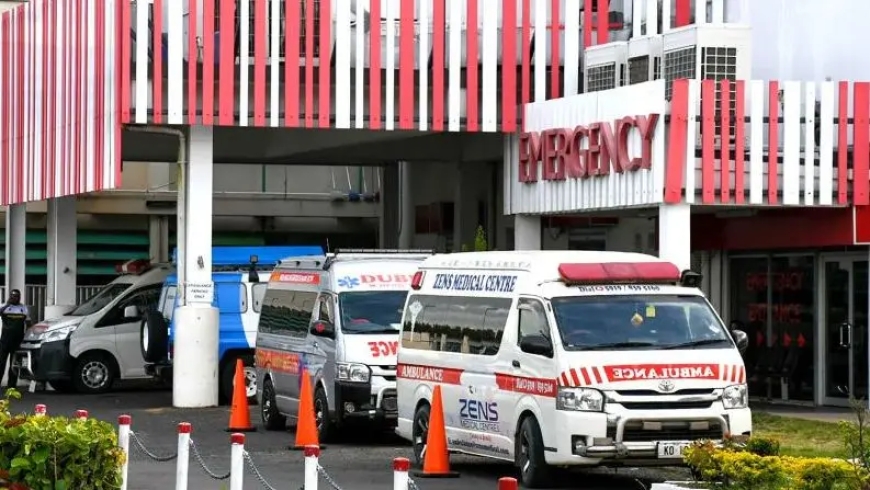
Fiji has declared a national HIV crisis after a sharp rise in new diagnoses, with the government announcing expanded testing, treatment and prevention services as it seeks to contain one of the fastest-growing HIV epidemics in the Pacific.
Health Minister Atonio Lalabalavu formally declared the emergency on Wednesday, saying the scale of the epidemic required a coordinated response across government and society.
“This decision recognises the seriousness of the epidemic and the urgent, coordinated response our country now needs,” Lalabalavu said.
Fiji recorded a record 2,016 newly diagnosed HIV cases in 2025, a 27% increase from 1,583 cases in 2024, according to the Ministry of Health and Medical Services.
The ministry cautions that diagnoses recorded in a given year do not necessarily represent infections acquired during that same year, as expanded testing is identifying people who had previously been unaware of their status.
UNAIDS estimates that about 9,100 people were living with HIV in Fiji in 2025, while only 39% knew their status and 22% were receiving antiretroviral treatment.
The agency said new HIV infections in Fiji increased twelvefold between 2010 and 2025.
The latest figures mean an estimated one in 60 adults in Fiji is living with HIV, compared with one in 167 five years ago, according to authorities.
The country has a population of fewer than one million people.
The epidemic is being driven by several factors, including sexual transmission and injecting drug use.
Fiji’s health ministry said injecting drug use accounted for a significant share of cases, while WHO has warned that a lack of access to sterile needles and syringes is increasing the risk of HIV transmission among people who inject drugs.
Health authorities and media reports have also highlighted a practice known locally as “bluetoothing”, in which people who inject drugs draw blood back into a syringe after injecting and pass it to another person.
Such blood-sharing can expose users to HIV and other blood-borne infections.
However, a WHO-supported assessment found limited evidence that bluetoothing itself was widespread, while documenting extensive reuse of needles and syringes because of inadequate access to sterile equipment.
Methamphetamine was identified as the most commonly injected drug among participants in the assessment, with some reporting that their first injection involved potentially contaminated equipment.
The government is now seeking to expand free and confidential HIV testing, access to antiretroviral treatment, pre-exposure prophylaxis and harm-reduction services, including sterile needles and syringes.
The crisis is also affecting children.
In 2025, 59 babies were born with HIV and 18 died before reaching their first birthday, according to figures reported by Reuters and other international media.
UNAIDS has backed Fiji’s emergency declaration, warning that the country’s experience demonstrates how quickly an HIV epidemic can accelerate when prevention, testing and treatment systems fail to keep pace with transmission.
What's Your Reaction?
 Like
0
Like
0
 Dislike
0
Dislike
0
 Love
0
Love
0
 Funny
0
Funny
0
 Angry
0
Angry
0
 Sad
0
Sad
0
 Wow
0
Wow
0