
















































































Ethiopia: Abiy sworn in for second term amid rising tensions

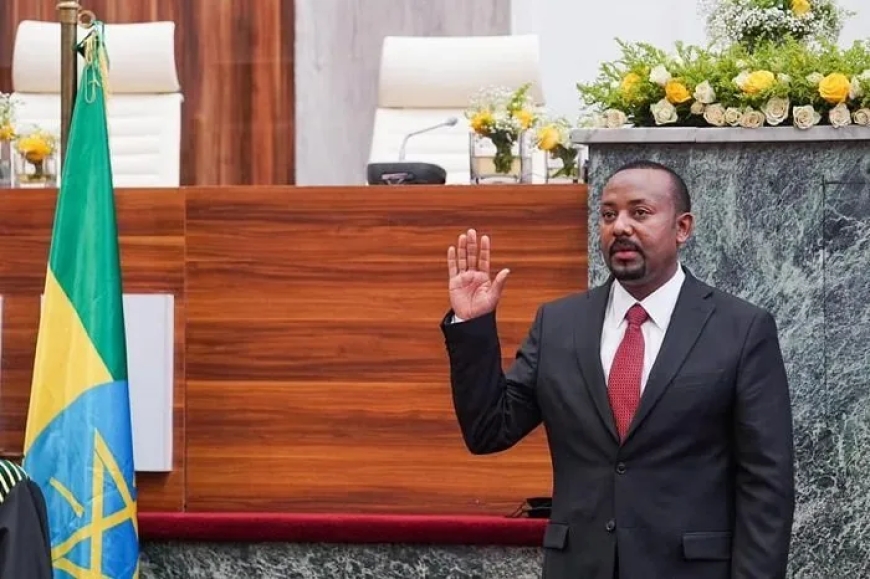
Ethiopian Prime Minister Abiy Ahmed has been sworn in for a second five-year term, beginning a new period in office as renewed fighting in the north threatens to deepen the country’s internal crisis and fuel tensions across the Horn of Africa.
Abiy took the oath on Monday during the opening of Ethiopia’s seventh parliamentary term in Addis Ababa, following his Prosperity Party’s decisive victory in the June general election.
The ruling party secured 438 seats in the 547-member House of Peoples’ Representatives, giving Abiy a strong parliamentary majority.
The election, however, was not held in several conflict-affected areas, including parts of Tigray and Amhara, while opposition groups raised concerns about political restrictions.
In his address to parliament, Abiy said his government would seek to make Ethiopia a stronger regional power and give the country greater influence in affairs affecting the Horn of Africa.
He also renewed his call for Ethiopia, one of the world’s most populous landlocked countries, to secure access to the Red Sea through negotiations and agreements based on mutual benefit.
“Based on the principle of give and take, we will work diligently to ensure that Ethiopia has an outlet to the sea,” Abiy said, according to reports by Al Jazeera and other international media.
Ethiopia lost direct access to the Red Sea after Eritrea became independent in 1993.
Abiy has repeatedly argued that access to a port is essential to Ethiopia’s economic development, while neighbouring coastal states have stressed their sovereignty over Red Sea territory.
The issue has become increasingly sensitive as relations between Addis Ababa and Asmara have deteriorated.
Ethiopia and Eritrea have recently severed diplomatic ties, while the two countries have exchanged accusations over involvement in the renewed fighting in Tigray.
The renewed conflict in northern Ethiopia is one of the biggest challenges facing Abiy’s new administration.
Fighting between federal forces and Tigrayan forces has intensified in recent weeks, raising fears that the violence could develop into a wider regional confrontation.
Reuters reported that airstrikes and artillery exchanges in Tigray had killed at least 17 people, while fighting also spread to other areas.
Ethiopia has accused Eritrea, Sudan and Egypt of supporting forces opposed to Abiy, allegations those countries deny.
The latest violence revives memories of Ethiopia’s 2020-2022 Tigray war, which caused a humanitarian catastrophe and killed hundreds of thousands of people.
The conflict ended with a peace agreement, but relations between the federal government and Tigrayan leaders have remained fragile.
Abiy also faces longstanding disputes with Egypt and Sudan over the Grand Ethiopian Renaissance Dam on the Blue Nile.
Ethiopia regards the dam as crucial to its economic development and electricity generation, while Egypt and Sudan have expressed concerns over its impact on downstream water supplies.
In his second term, Abiy has promised to strengthen Ethiopia’s military capabilities, including its air force, while urging armed groups to choose dialogue and peaceful negotiations.
His government has also pledged to tackle corruption and pursue economic development.
But the challenges are likely to extend beyond Ethiopia’s borders.
Analysts warn that the combination of renewed fighting in Tigray, strained relations with Eritrea, disputes over the Nile and Ethiopia’s demand for Red Sea access could create a dangerous convergence of conflicts in the Horn of Africa.
The African Union and other international actors have repeatedly called for dialogue and restraint as fears grow that Ethiopia’s internal conflict could trigger a broader regional crisis.
What's Your Reaction?
 Like
0
Like
0
 Dislike
0
Dislike
0
 Love
0
Love
0
 Funny
0
Funny
0
 Angry
0
Angry
0
 Sad
0
Sad
0
 Wow
0
Wow
0