















































Could the Panama Canal become another geopolitical flashpoint?
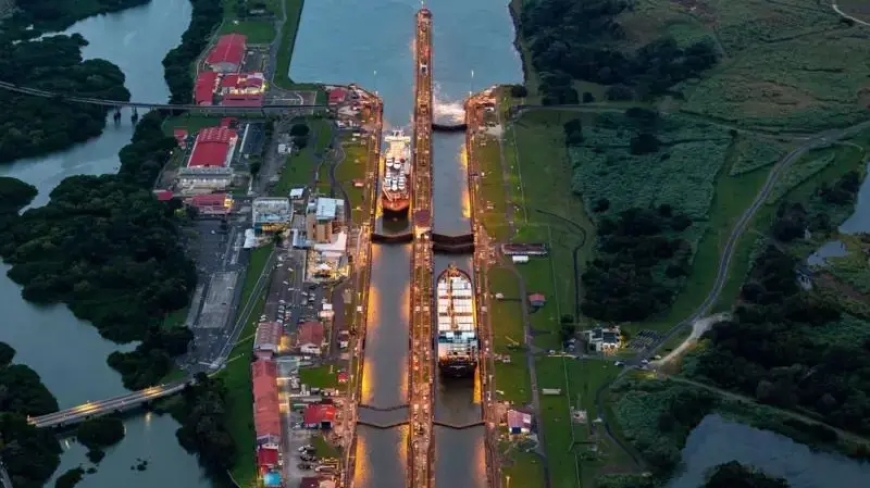
As conflict and geopolitical tensions continue to disrupt global shipping routes, the Panama Canal is increasingly attracting attention as another potential flashpoint in the competition between major powers.
The canal, which connects the Atlantic and Pacific oceans, is thousands of kilometres from the Middle East but remains strategically important to global trade and, increasingly, to the geopolitical rivalry between the United States and China.
Washington has repeatedly raised concerns about China’s influence around the canal, particularly because Hong Kong-based CK Hutchison Holdings had operated the Balboa and Cristóbal ports at the canal's Pacific and Atlantic entrances.
The United States has argued that Chinese-linked control of infrastructure around the waterway could create strategic and national-security risks.
US officials have also stressed the canal’s importance for the movement of commercial shipping and American naval forces between the Atlantic and Pacific.
China has rejected accusations that it controls the Panama Canal, accusing Washington of politicising the issue and interfering in Panama’s sovereignty.
Beijing has said the United States is using concerns about Chinese influence as a pretext to expand its own strategic role in the region.
Panama, meanwhile, has consistently maintained that the canal belongs to Panama and is operated by the Panama Canal Authority, rather than by China or any other foreign power.
The canal’s neutrality is also protected by the Torrijos-Carter treaties, which governed the transfer of control from the United States to Panama in 1999.
The dispute intensified in 2025 and 2026. In January 2026, Panama’s Supreme Court ruled that the concessions allowing CK Hutchison’s subsidiary to operate the Balboa and Cristóbal terminals were unconstitutional.
In February, the Panamanian government took control of the two ports.
The terminals were subsequently placed under new operators while Panama prepares for a new concession process.
However, the ports and the canal itself should not be confused.
CK Hutchison operated terminals near the canal; it did not control the Panama Canal, its locks or the Panama Canal Authority.
The Panama Canal dramatically shortens maritime journeys between the Atlantic and Pacific oceans.
Without it, ships travelling between the two oceans would have to take the much longer route around the southern tip of South America.
Ships pay tolls to transit the canal, with charges varying according to factors including vessel size, type and the locks used.
The canal’s official tariff system includes fixed charges per transit as well as other maritime-service fees.
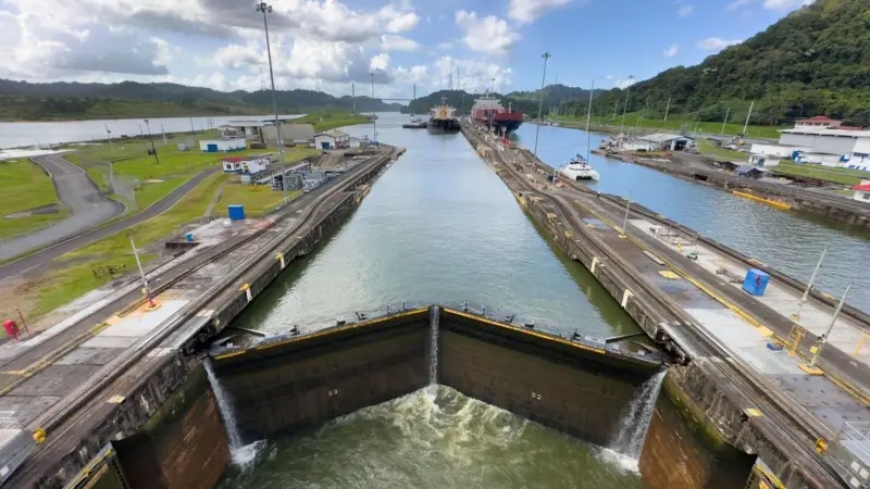
Its lock system raises ships from sea level to the level of Gatún Lake before lowering them back to sea level on the opposite side.
Because the locks depend on freshwater supplies, however, the canal also faces an increasingly important environmental challenge.
In August 2026, the Panama Canal Authority announced temporary reductions in daily transit capacity because of below-average rainfall and concerns linked to the developing El Niño weather pattern.
Daily transits are expected to fall from 36 to 34 initially and eventually to 32.
The combination of climate pressures, global shipping disruptions and US-China strategic competition means the Panama Canal is likely to remain under close international scrutiny.
While there is no indication that the canal itself is about to become a military conflict zone, its economic and strategic importance ensures that Panama will remain at the centre of a wider geopolitical contest over global trade, infrastructure and influence.
Photos
What's Your Reaction?
 Like
0
Like
0
 Dislike
0
Dislike
0
 Love
0
Love
0
 Funny
0
Funny
0
 Angry
0
Angry
0
 Sad
0
Sad
0
 Wow
0
Wow
0