








































What the new DR Congo–Rwanda Peace deal brokered in Washington really contains

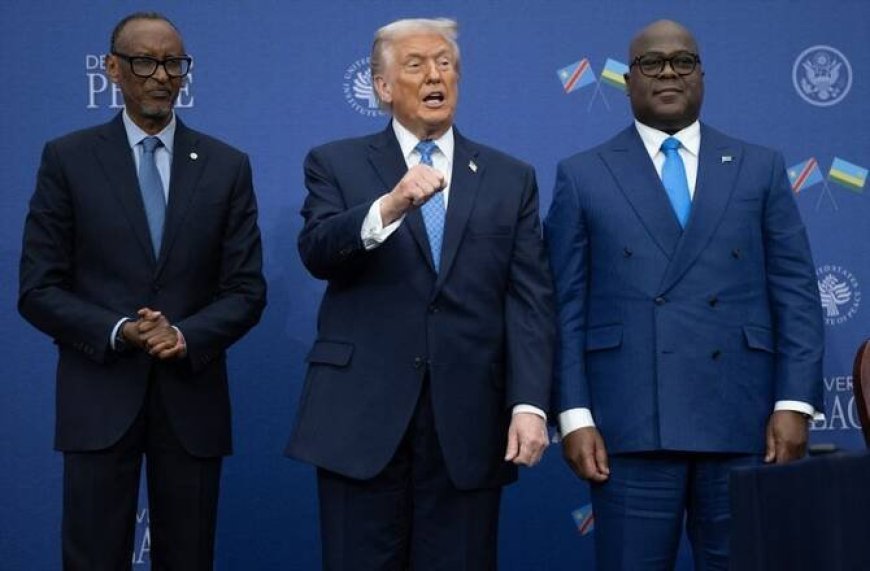
The US and Qatar-brokered peace agreement must be followed by disengagement and the return of displaced families, DRC says.
The Democratic Republic of the Congo (DRC) and Rwanda have signed a peace deal in the United States to end years of fighting between the neighbouring countries.
Meeting at the State Department in Washington, DC, on Friday, foreign ministers from the two African countries signed the agreement that was mediated by the US and Qatar.
The deal would see Kinshasa and Kigali launching a regional economic integration framework within 90 days and forming a joint security coordination mechanism within 30 days.
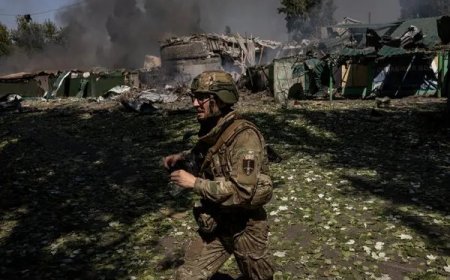
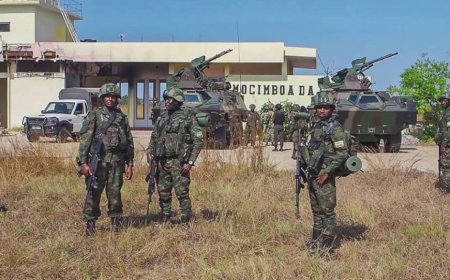
It raises hopes for an end to fighting that has escalated with the advance of M23 Rebels in the DRC’s mineral-rich provinces of North and South Kivu this year.
The conflict has killed thousands and displaced hundreds of thousands more since January.
The escalation is just the latest in a decades-old cycle of tensions and violence, rooted in the the 1994 Genocide against Tutsis in Rwanda.
“This moment has been long in coming. It will not erase the pain, but it can begin to restore what conflict has robbed many women, men and children of safety, dignity and a sense of future,” said Congolese Foreign Minister Therese Kayikwamba Wagner.
“So now our work truly begins,” she added at the signing, saying the agreement would have to be followed by “disengagement, justice, and the return of displaced families, and the return of refugees, both to the DRC and Rwanda”.
“Those who have suffered the most are watching. They are expecting this agreement to be respected, and we cannot fail them,” she said.
- M23 and FDLR
Rwandan Foreign Minister Olivier Nduhungirehe said that the agreement heralded a “turning point”.
While Rwanda denies accusations it is backing M23, Kigali has demanded an end to another armed group in the DRC – the Democratic Forces for the Liberation of Rwanda (FDLR) – which was established by Hutus linked to the killings of Tutsis 1994 Genocide against Tutsis.
During the signing, he insisted on “an irreversible and verifiable end” to the DRC’s “support” for the FDLR. The agreement calls for the “neutralisation” of the FDLR.
Reporting from Goma, the capital of the DRC’s North Kivu province, Al Jazeera’s Alain Uaykani said the deal was a “big step”, but there was “confusion” on the ground over the absence of any mention of when the M23 Rebels would withdraw.
“Rwanda [is] always saying that they are not the ones who should ask M23 to leave, because this is a Congolese problem,” he said, adding that the rebels were appointing governors and controlling airports in the DRC’s provinces of North and South Kivu, whose capital cities they seized in January and February.
The deal does not explicitly address the gains of the M23 but calls for Rwanda to end “defensive measures” it has taken.
- Critical minerals
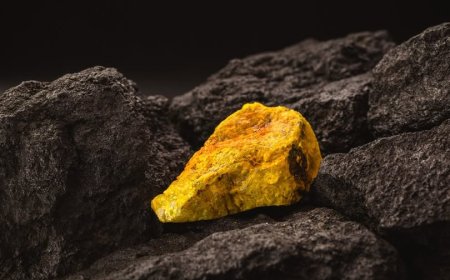
The DRC-Rwanda deal will also help the US government and American companies gain access to critical minerals like tantalum, gold, cobalt, copper and lithium needed for much of the world’s technology at a time when the US and China are actively competing for influence in Africa.
Ahead of the signing on Friday, US President Donald Trump said, “We’re getting, for the United States, a lot of the mineral rights from the Congo as part of it. They’re so honoured to be here. They never thought they’d be coming.”
Welcoming the foreign ministers to the White House, he said:“The violence and destruction comes to an end, and the entire region begins a new chapter of hope and opportunity. This is a wonderful day.”
The DRC sits on vast untapped reserves of mineral wealth, estimated to be worth around $24 trillion.
It has said it is losing around $1bn worth of minerals in illegal trading facilitated by the war.
The agreement was mediated through Massad Boulos, a Lebanese-American businessman and father-in-law of Trump’s daughter Tiffany, who was appointed by the president as a senior advisor on Africa.
“This is an important moment after 30 years of war,” said US Secretary of State Marco Rubio, who hosted the two foreign ministers at the Department of State for the signing of the agreement.
“It’s about allowing people to live. It’s about allowing people to now have dreams and hopes for a better life, for prosperity, for economic opportunity, for a family reunification, for all the things that make life worth living.
“Those things become impossible when there’s war and when there’s conflict,” he added.
Analysts see the deal as a major turning point but do not believe it will quickly end the fighting that has killed millions of people since the 1990s.
What's Your Reaction?
 Like
0
Like
0
 Dislike
0
Dislike
0
 Love
0
Love
0
 Funny
0
Funny
0
 Angry
0
Angry
0
 Sad
0
Sad
0
 Wow
0
Wow
0