






















































































































How Human being changed personality in six weeks


Drawing on emerging psychological research suggesting that personality traits are more flexible than once believed, writer Laurie Clarke set out to test whether she could deliberately change aspects of her own personality over six weeks.
Long identifying as highly neurotic, introverted, and perfectionistic, Clarke approached the experiment with skepticism, curiosity, and a fair amount of anxiety.
What followed was a modest but meaningful personal transformation that echoed findings from contemporary personality science.
Clarke begins by describing her long-standing neurotic tendencies, marked by excessive worry, health anxiety, rumination, and panic that first emerged in her teenage years.
These traits were confirmed by an online personality test, which placed her higher than 85% of people on neuroticism.
Although she felt her neuroticism had softened somewhat with age through self-directed coping strategies, it remained a dominant feature of her personality.
When her editor suggested she experiment with changing her personality using evidence-based interventions, Clarke agreed—albeit warily.
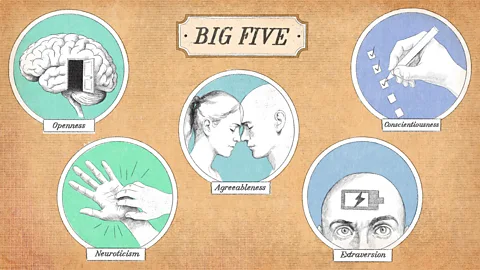
Her experiment was grounded in the “Big Five” personality framework, the most empirically supported model in psychology.
The Big Five divides personality into openness, conscientiousness, extraversion, agreeableness, and neuroticism, each encompassing more specific traits.
While personality was once considered largely fixed after early adulthood, decades of research now show that traits can and do change over time, influenced by life experiences, maturation, and, increasingly, intentional efforts.
Psychologists such as Brent Roberts and Mirjam Stieger explain that people naturally tend to become less neurotic and more agreeable and conscientious as they age.
More recent research, however, suggests that targeted interventions can accelerate these changes dramatically—sometimes producing shifts equivalent to decades of natural development within just a few months.
Clarke had only six weeks, making her test especially ambitious.
Before beginning, Clarke assessed her baseline personality. In addition to very high neuroticism, she scored extremely high on openness and conscientiousness, reflecting intellectual curiosity and perfectionism.
Her agreeableness sat squarely in the middle, while her extraversion was low.
From this profile, she set her goals: to become less neurotic, more extraverted and agreeable, and slightly less conscientious where perfectionism was concerned.
Research suggests these preferences are common. Most people wish to be more extraverted and emotionally stable, though fewer want to increase agreeableness due to fears of being perceived as weak or compliant.
Still, Clarke believed that learning to trust others more could reduce her anxiety, making agreeableness an important target.
To guide her efforts, Clarke drew on studies led by psychologists such as Nathan Hudson and Mirjam Stieger.
These studies asked participants to choose traits they wanted to change and then complete weekly challenges designed to align their thoughts and behaviors with those traits.
Results showed small but statistically significant improvements in extraversion, conscientiousness, neuroticism, and agreeableness, especially among participants who fully engaged with the activities.
Using these studies as a blueprint, Clarke adopted a set of interventions tailored to each trait.
To reduce neuroticism, she meditated daily, kept a gratitude journal, and practiced reframing negative thoughts.
To boost extraversion, she attended social events, spoke to strangers, and opened up emotionally with friends.
To increase agreeableness, she performed small acts of kindness and consciously interpreted others’ behavior more generously.
For conscientiousness, she practiced organization and goal-setting—though she later focused more on tempering perfectionism than increasing productivity.
Openness required little effort, as she already scored highly there.
Not all the activities were comfortable. Clarke avoided some challenges entirely, such as striking up conversations with strangers in bars or buying coffee for people in line, which triggered fears of embarrassment or misinterpretation.
Self-affirmations also felt unnatural. Still, she committed to doing what she could, particularly social engagement, meditation, and journaling.
Contrary to her expectations, increased social activity did not drain her. Instead, it became easier over time.
She returned to classes she had previously attended but avoided socializing at, and found herself interacting more naturally.
By the end of the six weeks, she even initiated casual conversation with a stranger at a yoga class—something she considered highly uncharacteristic.
Meditation proved especially impactful. Initially overwhelmed by constant mental chatter, Clarke gradually learned to sit with silence and emotional discomfort.
This helped her recognize anxious thoughts as transient rather than meaningful or threatening.
Psychologist Shannon Sauer-Zavala explains that neuroticism often involves emotional avoidance and self-criticism, and that learning to tolerate emotions without judgment is key to reducing it.
Sauer-Zavala’s research suggests that targeting core traits like neuroticism may be a more efficient way to treat mental health conditions than focusing on specific diagnoses.
Clarke also experimented with reducing perfectionism, another vulnerability linked to high conscientiousness.
She practiced sending work without excessive checking and allowing minor imperfections.
While uncomfortable at first, these exercises proved largely anticlimactic, reinforcing the idea that feared consequences rarely materialize.
At the end of six weeks, Clarke retook the personality test. While she did not feel radically transformed, the results showed notable shifts.
Her extraversion rose from the 30th to the 50th percentile, agreeableness from the 50th to the 70th, and neuroticism dropped dramatically from the low 80s to the 50th percentile.
Conscientiousness and openness remained largely unchanged.
She acknowledged several limitations: The experiment was unscientific, she was motivated to see change, and her final test coincided with positive social experiences that may have boosted her mood.
Still, her results closely mirrored those seen in formal studies, which often find changes of similar magnitude.
As a rough control, Clarke had her partner take the same tests without attempting any personality changes.
His results remained stable, reinforcing the possibility that her shifts were not purely due to chance.
Ultimately, Clarke concludes that while personality change is neither dramatic nor easy, it is possible.
Most people remain largely the same, and sustained effort is required.
Yet even modest changes—especially reduced neuroticism and increased social engagement—can meaningfully improve well-being.
As her partner wryly observes when hearing her results, change may be possible, but desire and effort remain the deciding factors.
Photos

What's Your Reaction?
 Like
0
Like
0
 Dislike
0
Dislike
0
 Love
0
Love
0
 Funny
0
Funny
0
 Angry
0
Angry
0
 Sad
0
Sad
0
 Wow
0
Wow
0