









































































































Iran and Israel exchange missile strikes as ceasefire crisis deepens


Israel and Iran have sharply escalated military actions despite a fragile ceasefire framework, with analysts warning that both sides are testing its limits while seeking greater strategic leverage in a rapidly widening regional conflict.
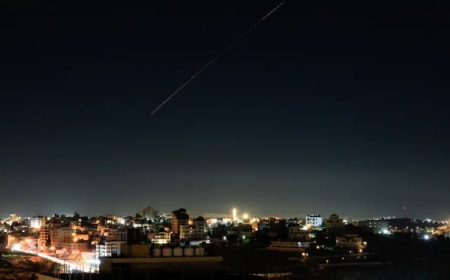
Overnight, Israel launched a series of strikes across Iran, with explosions reported in Tehran, Tabriz, Karaj, and Isfahan.
The attacks marked one of the most serious escalations since a US-brokered ceasefire took effect in April.
The strikes came just hours after Iran fired multiple ballistic missiles toward northern Israel, accusing Israel of repeatedly violating the truce through ongoing operations in Lebanon.
Iran said its actions were retaliation for Israeli strikes in Beirut’s southern suburbs, where at least two people were killed and around 20 injured despite another US-mediated ceasefire announcement involving Israel and Lebanon earlier this month.
According to Israeli media reports, including Haaretz, Iran has launched around 30 ballistic missiles since Sunday night.
Most were intercepted, though debris was reported falling in parts of Jordan and the West Bank.
Israel responded with further attacks on central and western Iran, while Iran launched a second wave of missile fire.
The conflict has also drawn in regional actors. Missiles were launched from Yemen, with Houthi forces claiming responsibility, while Hezbollah continues clashes with Israeli forces in southern Lebanon.
Saudi Arabia briefly issued a security alert in Al-Kharj, though Iran denied involvement in any attack on the area.
The latest exchange represents the first direct Iranian missile strike on Israel since the April 8 ceasefire agreement and the first time Tehran has responded directly from its own territory to Israeli operations in Lebanon, which have intensified since March.
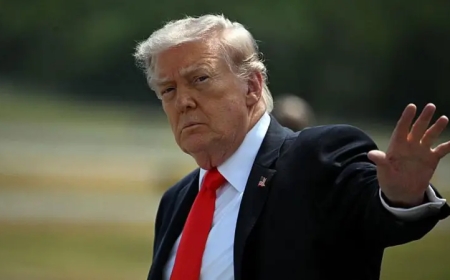
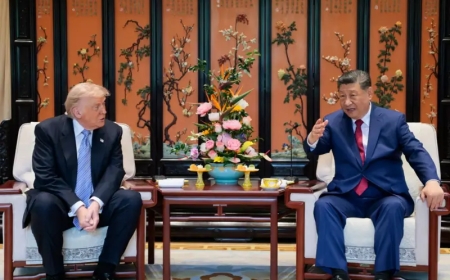
Tensions were further heightened after US President Donald Trump called on both sides to halt attacks, saying on Truth Social that “Israel and Iran must immediately stop ‘Shooting’.” However, Israeli strikes reportedly continued shortly after Washington urged restraint, raising questions about coordination between the allies.
Trump also stated that Israeli Prime Minister Benjamin Netanyahu would ultimately have to accept any US-negotiated agreement with Iran, asserting that “I call the shots.”
Despite this, US officials have continued to publicly affirm support for Israel, while internal divisions over strategy appear to be emerging.
Analysts say Israel’s continued military actions risk undermining US diplomatic efforts and could deepen tensions between Washington and Tehran.
Some argue that Israel’s defiance may weaken US credibility in enforcing any ceasefire framework.
The conflict in Lebanon remains central to the broader crisis. Despite a US-brokered ceasefire announced in April, Israeli forces continue operations in southern Lebanon and maintain control over significant territory.
More than 3,000 people have reportedly been killed in Lebanon since March, with over one million displaced.
Israel has also repeatedly struck Beirut’s southern suburbs, which it claims are Hezbollah strongholds.
Analysts say Israel has attempted to redefine the rules of engagement, linking attacks in Lebanon to potential strikes on Iran itself, a strategy that has now triggered direct Iranian retaliation.
Experts warn that the conflict is increasingly interconnected across multiple fronts—Lebanon, Gaza, Yemen, and Iran—effectively merging previously separate theatres of war into a single regional confrontation.
While Iran’s missile response signals a shift toward direct engagement, analysts note it remains limited in scale and largely intercepted, suggesting a calibrated approach aimed at deterrence rather than full-scale war.
The key uncertainty remains whether the United States will be drawn directly into the escalation. For now, Washington appears intent on avoiding broader war due to regional instability and global economic risks, particularly oil market volatility.
However, analysts caution that the widening gap between US calls for restraint and Israel’s willingness to escalate could define the next phase of the conflict.
As both Iran and Israel continue to test the boundaries of the ceasefire, observers warn that a renewed cycle of escalation may already be underway.
What's Your Reaction?
 Like
0
Like
0
 Dislike
0
Dislike
0
 Love
0
Love
0
 Funny
0
Funny
0
 Angry
1
Angry
1
 Sad
0
Sad
0
 Wow
0
Wow
0