



























































After Venezuela’s Maduro, Trump threatened Greenland, Cuba and Colombia

A day after a dramatic U.S. military operation that led to the ouster of Venezuelan President Nicolás Maduro, President Donald Trump intensified rhetoric that has fueled global concern about an increasingly aggressive U.S. posture in the Western Hemisphere and beyond.
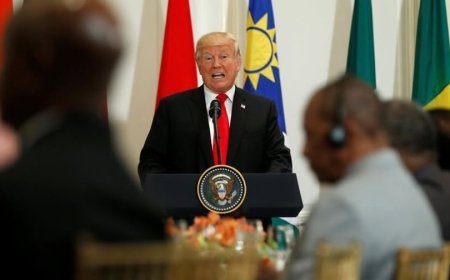
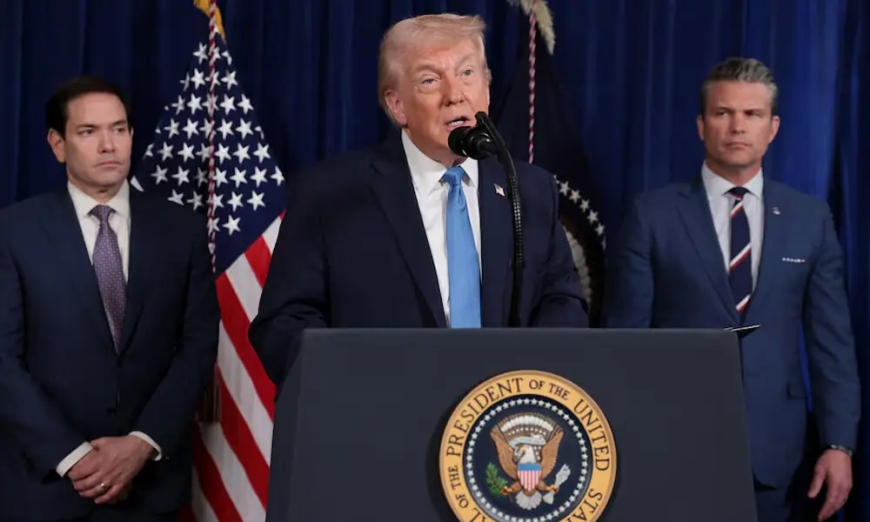
Speaking on Sunday alongside remarks from Secretary of State Marco Rubio, Trump raised fresh threats and warnings aimed at Greenland, Cuba, and Colombia, prompting allies and adversaries alike to ask: who might be next?
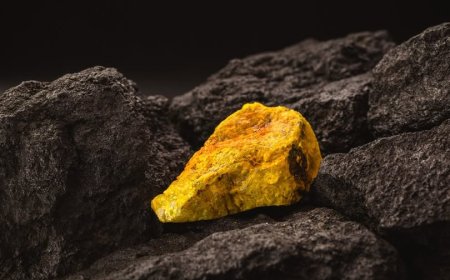
Trump renewed his long-standing call for the United States to take control of Greenland, a mineral-rich Arctic territory governed by Denmark, arguing that the move is necessary for U.S. national security.
He claimed Greenland is surrounded by Russian and Chinese ships and suggested Denmark is incapable of defending the territory adequately.
While flying back to Washington from Florida, Trump said the U.S. “needs Greenland” for strategic reasons, and when asked whether the Venezuela operation should concern Greenland, he replied that the territory would “have to view it themselves.”
These remarks followed the publication of Trump’s updated National Security Strategy, which emphasizes restoring “American preeminence in the Western Hemisphere” during his second term.
Trump has frequently cited the Monroe Doctrine, which opposed European colonial influence in the Americas, and the Roosevelt Corollary, which historically justified U.S. interventions in the region.
He has even jokingly referred to this doctrine as the “Don-roe Doctrine,” underscoring his personal imprint on U.S. foreign policy.
Trump’s comments sparked unease in Denmark, where officials reacted strongly.
Prime Minister Mette Frederiksen said the U.S. has “no right to annex” Greenland and stressed that Denmark already provides broad military access to the U.S.
through existing NATO and bilateral security agreements. She urged Washington to stop threatening a close ally and emphasized that Greenland’s people have made it clear they are not for sale.
Denmark also endorsed a European Union statement calling for respect for Venezuelans’ right to determine their future, countering Trump’s assertion that the U.S. would effectively “run” Venezuela after Maduro’s removal.
Tensions escalated further after Trump mocked Denmark’s Arctic defense efforts, joking that the country had added “one more dog sled” to Greenland’s security apparatus.
Anger in Denmark and Greenland grew after a social media post by Katie Miller, a former Trump administration official and spouse of Deputy Chief of Staff Stephen Miller, showed an illustration of Greenland colored like the U.S. flag with the caption “SOON.”
Denmark’s ambassador to Washington publicly responded by demanding full respect for Danish territorial integrity.
Although Trump’s interest in Greenland had faded from headlines in recent months, it resurfaced after he announced plans to appoint Louisiana Governor Jeff Landry as a special envoy to Greenland.
Landry said he would help Trump make Greenland “a part of the U.S.” Trump has consistently refused to rule out the use of military force to gain control of the territory.
Meanwhile, attention also turned to Cuba, a key Venezuelan ally. Secretary of State Rubio issued a stern warning, claiming Cuban officials played a direct role in supporting Maduro.
According to Rubio, Cuban personnel served as Maduro’s personal guards and controlled internal intelligence operations within Venezuela.
The Cuban government responded by announcing that 32 of its officers were killed during the U.S. operation.
Trump predicted dire consequences for Cuba, already struggling under decades of U.S. sanctions.
He said the Cuban economy, heavily reliant on subsidized Venezuelan oil, would deteriorate further following Maduro’s ouster.
“It’s going down for the count,” Trump said, signaling possible further pressure on Havana.
Trump also delivered sharp warnings to Colombia and its leftist president, Gustavo Petro.
He accused Petro of overseeing cocaine production and trafficking to the United States, calling him “a sick man.”
The Trump administration sanctioned Petro, his family, and members of his government in October over alleged involvement in the global drug trade.
Colombia is the world’s largest cocaine producer and a long-time U.S. security partner.
Under Trump, the U.S. launched strikes on suspected drug-smuggling vessels originating from Venezuela and later expanded those operations to target boats linked to Colombia.
In September, the U.S. designated Colombia as failing to cooperate adequately in the drug war for the first time in nearly three decades, resulting in significant cuts to U.S. aid.
When asked whether he would consider a military operation against Colombia, Trump replied, “It sounds good to me,” intensifying fears that Venezuela may not be an isolated case.
His comment that Petro “won’t be doing it for very long” suggested potential efforts to remove or undermine the Colombian leader.
Together, Trump’s statements and actions following the Venezuela operation signal a far more assertive—and confrontational—U.S. approach to regional and global affairs.
While the administration frames its moves as necessary for security and stability, critics warn that the rhetoric and threats risk destabilizing alliances, provoking international backlash, and expanding U.S. military involvement across multiple regions at once.
What's Your Reaction?
 Like
0
Like
0
 Dislike
0
Dislike
0
 Love
0
Love
0
 Funny
0
Funny
0
 Angry
0
Angry
0
 Sad
1
Sad
1
 Wow
0
Wow
0